Before demolishing a wall or renovating a basement in an older home, one question always comes up: is there asbestos in there? It's a good question to ask, and the answer is easier to get than you might think.
This article explains which homes are at risk, where asbestos hides, what the law says and the only reliable way to confirm its presence before any work. No scaremongering, just clear markers.
The essentials in brief
Canada banned asbestos on December 30, 2018. Homes built or renovated before the 1990s are the most likely to contain it.
No visual sign confirms the presence of asbestos. Only an accredited laboratory analysis can do that, from a sample taken safely.
In Quebec, you must presume a suspect material contains asbestos until an analysis has shown otherwise.
Which homes are most at risk?
The age of the building is the first clue. Canada banned the import, sale and use of asbestos on December 30, 2018 (Canada Gazette, 2018). But asbestos was widely used in construction for decades before that date. The older your home, the higher the probability of finding some.
The CNESST provides two useful reference dates. Buildings constructed before February 15, 1990 must be inspected to locate fireproofing spray, and those before May 20, 1999 to locate thermal insulation (calorifuges) that covers pipes and ducts (CNESST).
Sources: Canada Gazette (regulation SOR/2018-196) and CNESST, identification of materials likely to contain asbestos.
Where does asbestos hide in a home?
Asbestos was valued for its resistance to fire and heat, which is why it turns up in a wide variety of materials. Here are the most common places in a Quebec home.
1
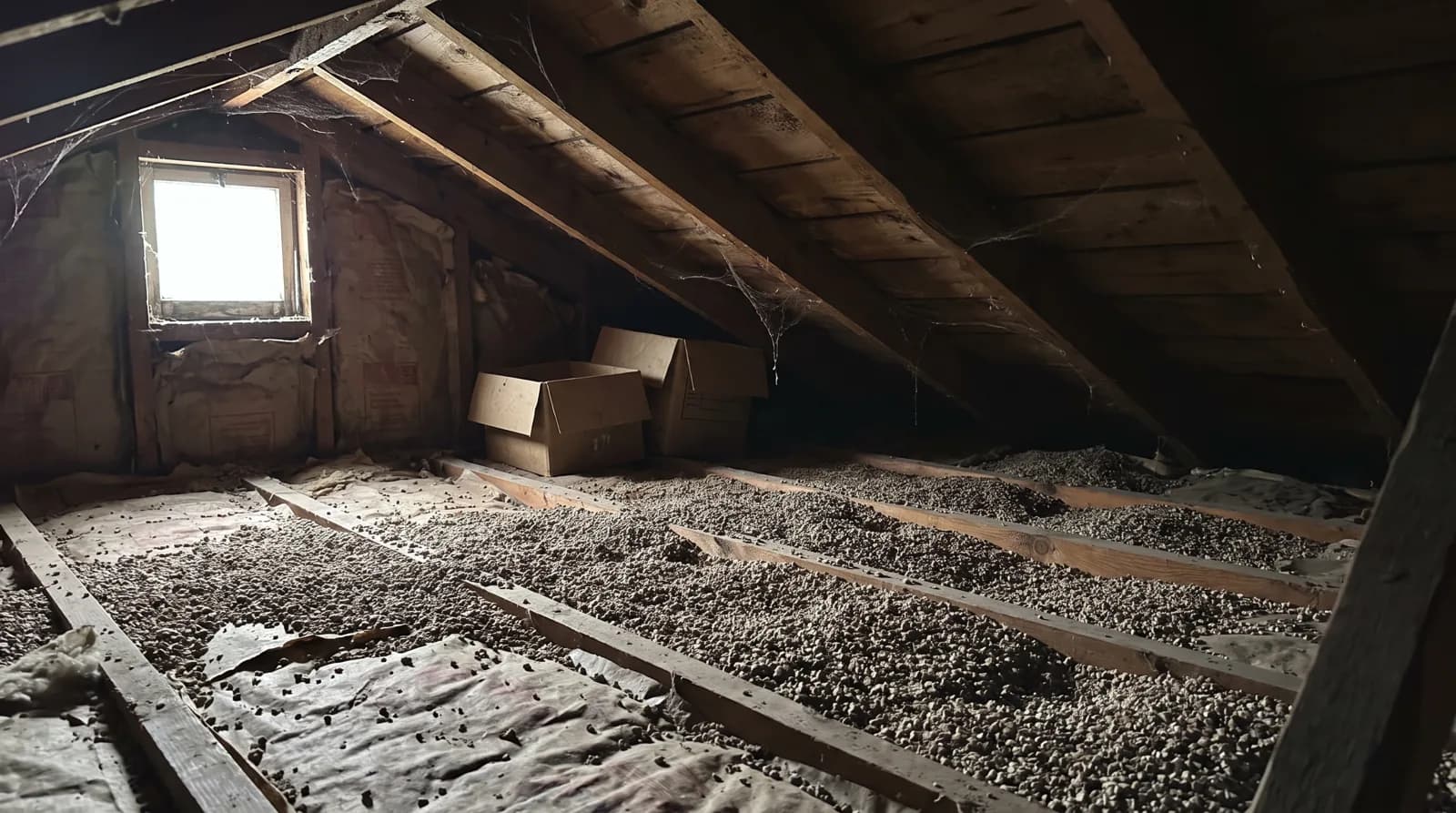
Vermiculite insulation (Zonolite)
Small grey-brown granules in attics and walls. Sold in Canada from about 1920 to 1990, it can contain asbestos according to Health Canada.
2
Vinyl floor tiles and their adhesives
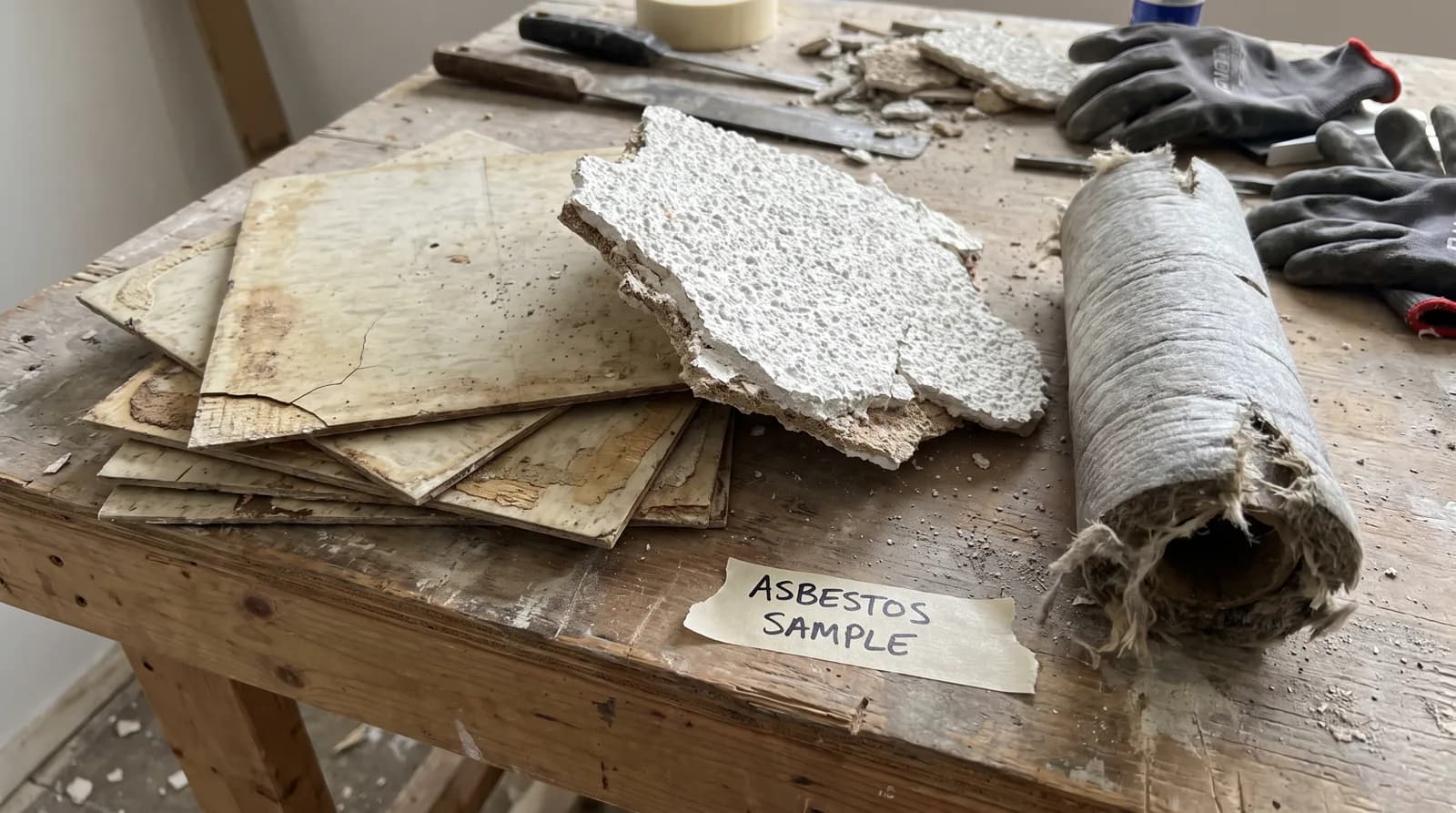
The 9-inch floor tiles and the black glue under old floors are among the most frequent sources.
3
Plaster, stucco and decorative finishes
Textured (popcorn) ceilings, coatings and joint compounds. Compounds made in North America since January 1, 1980 are generally free of it.
4
Thermal insulation on pipes
The insulating wrap around hot water pipes and ducts in basements and crawl spaces.
5
Fibre cement and roofing
Exterior siding, soffits, asbestos-cement pipes, asphalt shingles and roofing felt.
6
Ceiling tiles and panels
Suspended ceiling tiles and some acoustic panels in older finished basements.
Can you recognize asbestos by eye?
No, and this is the most important point to remember. No colour, no texture, no smell confirms the presence of asbestos. The fibres are microscopic. A material can look perfectly ordinary and contain asbestos, or the opposite.
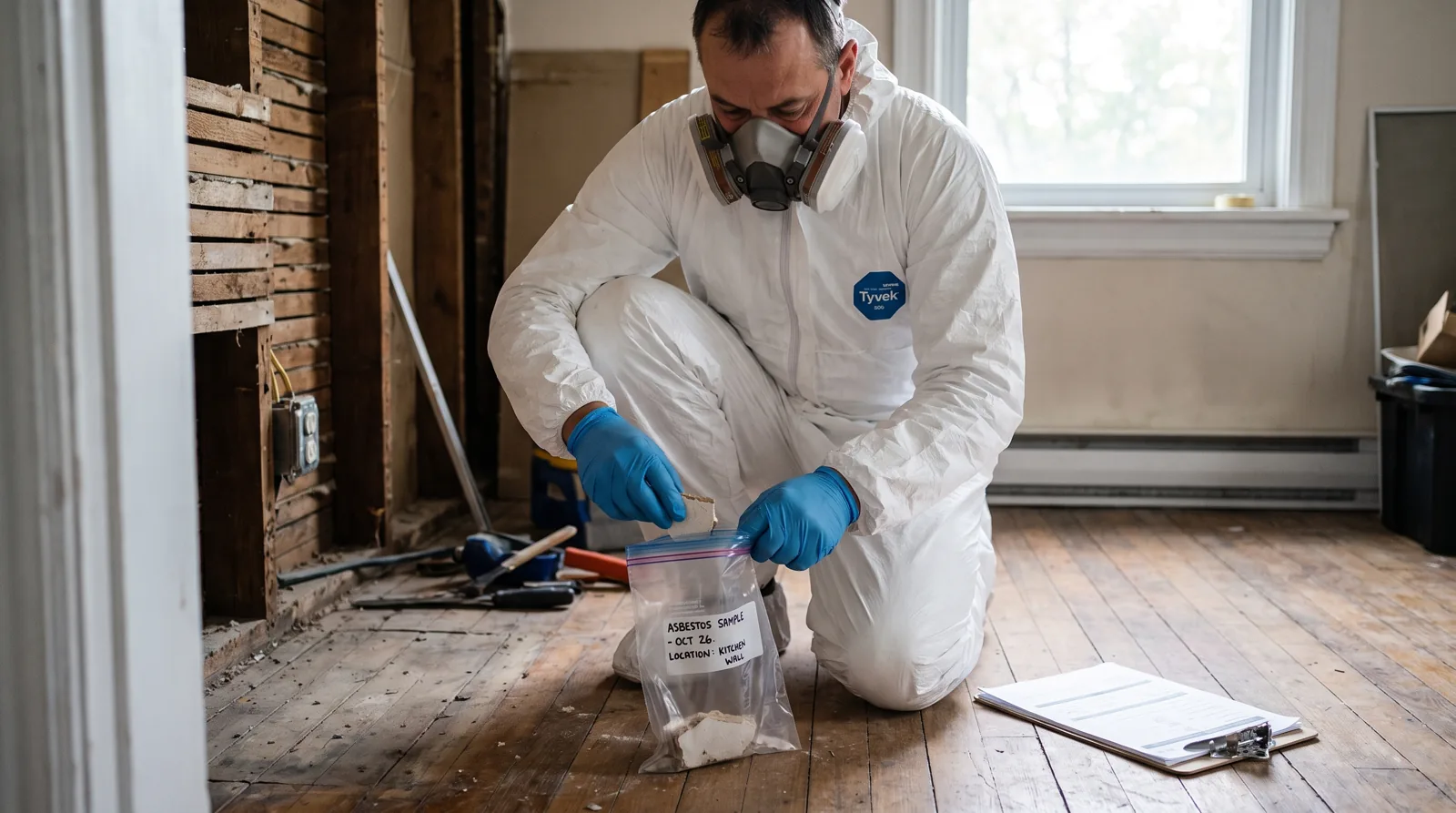
The only way to know for certain is the analysis of a sample in an accredited laboratory. The sampling must be done safely, because scraping or breaking a material is precisely what releases fibres into the air. Analysing one sample generally costs between 99 and 199$.
Asbestos and demolition: what the law says in Quebec
Here, the regulation is clear and it protects you. Before undertaking work likely to release dust, such as demolition, you must identify and characterize the materials likely to contain asbestos. A material is considered to contain it as soon as its concentration reaches 0.1%.
The presumption principle
Quebec law requires you to presume that a suspect material contains asbestos until an analysis has shown otherwise. In other words, when in doubt, you treat the material as if it contained some. That is why the pre-work evaluation is not a mere precaution, it is an expected step.
This requirement explains why a serious demolition contractor will talk to you about asbestos before even talking about price. It's not to inflate the bill, it's because characterization is part of doing the job right in an older building.
Why you shouldn't take it lightly
Asbestos remains the leading cause of work-related deaths in Quebec. According to the INSPQ, it was responsible for 83% of occupational disease deaths in the province in 2024 (INSPQ). Asbestos-related illnesses often take years to appear, which makes prevention all the more important at the time of the work.
The good news is that asbestos in good condition and left intact does not present an immediate danger. The risk appears when it is disturbed, for example during demolition. That is exactly why the evaluation is done before, not during.
In doubt before your work?
Kasa Demolition coordinates the evaluation and, if needed, the decontamination with certified firms, before starting the demolition. A single point of contact, no improvisation.
Finding asbestos is not a disaster, it's information that lets you work safely. Here are the steps to follow.
1
Do not touch it
As long as the material is not disturbed, the risk stays low. Avoid scraping, drilling or breaking the affected area.
2
Have a sample analysed
A safe sample is sent to an accredited laboratory to confirm the presence and type of asbestos.
3
Entrust removal to a certified firm
Decontamination must be carried out by a specialized company, following CNESST protocols. It is never a job to improvise.
4
Resume work once the area is secured
Demolition or renovation resumes only after the area has been decontaminated and validated.
How to stay safe between the test and the removal
A few days often pass between the laboratory result and the certified firm's intervention. During that period, a few simple gestures reduce the risk of exposure for you and your family.
Close off the affected room and limit access, especially for children and pets.
Never vacuum or sweep suspect debris. A household vacuum recirculates fibres into the air instead of trapping them.
Shut off the ventilation connecting the area to the rest of the house, to avoid spreading any fibres through the ducts.
Do not try to cover, seal or repair the material yourself. Any handling can release fibres.
Avoid drafts and fans in the room, which can put dust back into suspension.
Keep in mind
These measures are temporary and meant to limit exposure, not to fix the problem. The safe removal of asbestos always falls to a certified firm. If you are unsure about the condition of a material, the CNESST and Health Canada offer reliable information to guide you.
In summary
If your home was built before the 1990s, it may contain asbestos, but only a laboratory test can confirm it. Quebec law requires you to presume its presence in suspect materials until an analysis has proven otherwise, and to evaluate before any work that generates dust.
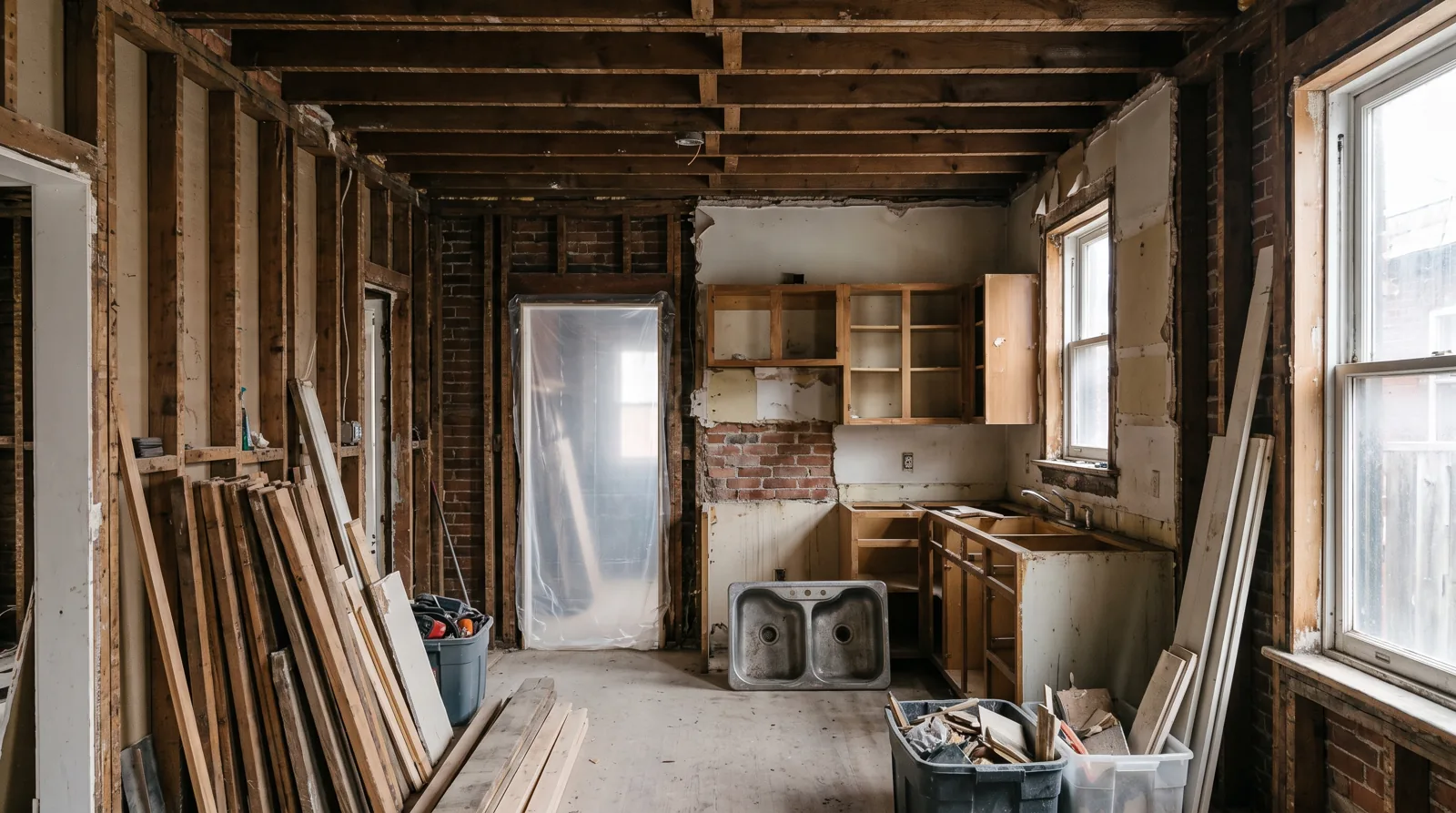
Before an interior demolition or renovation in an older building, the right reflex is to have the space evaluated. It's simple, it costs little, and it protects your health and your family's.
Cristian Mora
Co-Founder, Kasa Demolition
Cristian Mora is co-founder of Kasa Demolition and oversees estimating and technical coordination. The son of an immigrant builder, he carries on a 40-year family legacy in construction with a modern, disciplined approach.
The most common questions about asbestos before a demolition or renovation.
Related articles
Tips
July 23, 2026 · 8 min
How Much Does Interior Demolition Cost in Montreal?
Realistic price ranges for interior demolition in Montreal: cost per square foot, debris, permits and asbestos. What drives the bill and how to get a fair quote.
How to Prepare for Interior Demolition: A Step-by-Step Guide
Everything you need to know before starting an interior demolition. Permits, safety, choosing a contractor, and protecting the spaces you want to keep.